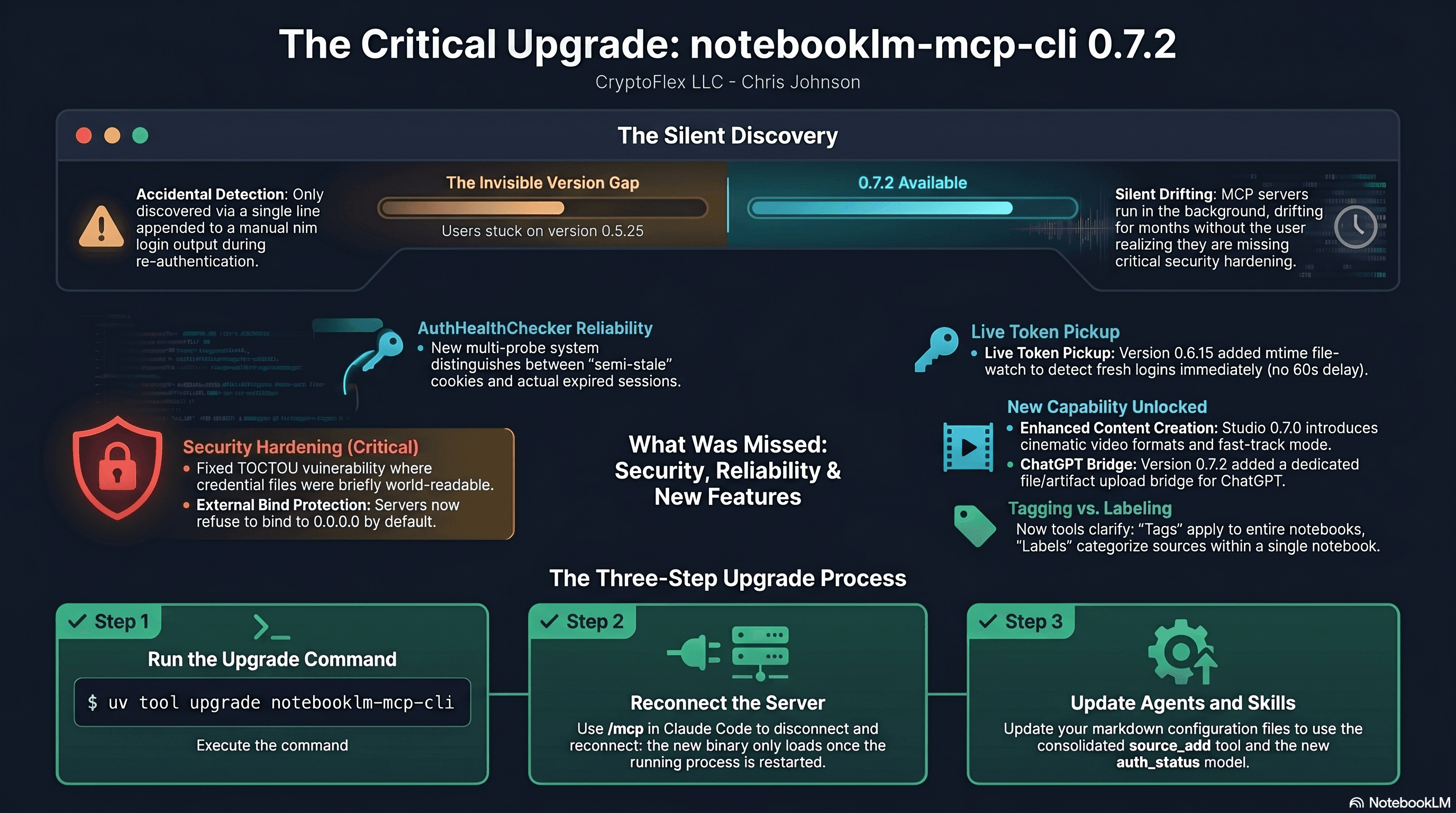
I was two minor versions behind on notebooklm-mcp-cli and had no idea until a re-auth banner interrupted a session. The gap was 0.5.25 to 0.7.2. Security fixes, auth reliability improvements, and new features I was missing the whole time. Here is the three-part upgrade that most people stop after step one.
My Gmail assistant ran clean for two months, then quietly died for a full week before I noticed. The bridge daemon that drove it had pinned itself to a stale Claude CLI version, every scheduled fire failed within seconds, and no transcript was ever written. This post walks through why I migrated the agent off Claude Routines and onto the Claude Agent SDK, what the new stack looks like on launchd, and the parity gate that has to pass before the old agent gets decommissioned.
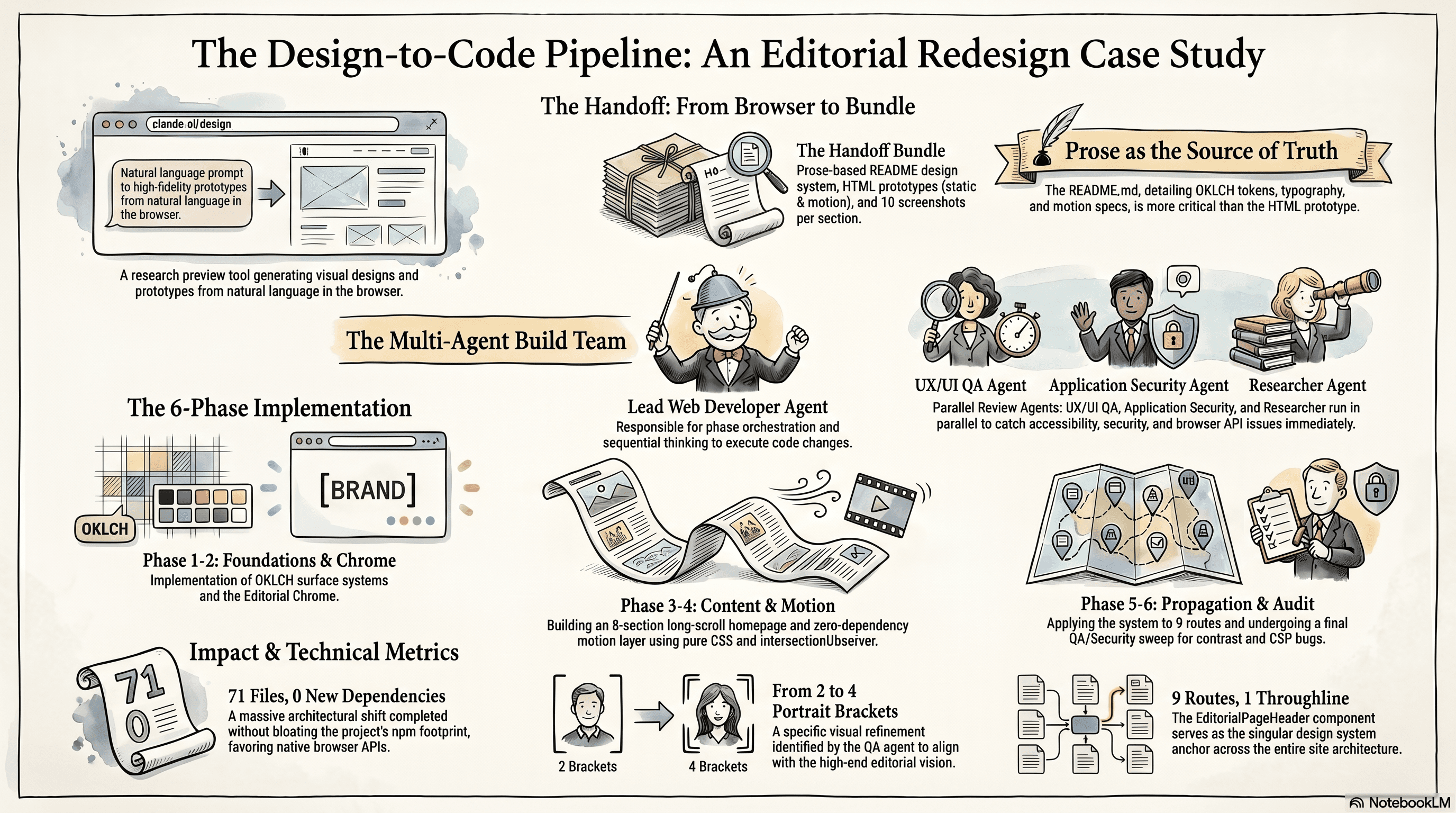
Anthropic launched claude.ai/design the same week I'd been sketching a new look for this site. I did the design work in the browser, exported the handoff bundle, pointed Claude Code at it, and got a production rebuild six phases later with zero new npm dependencies.
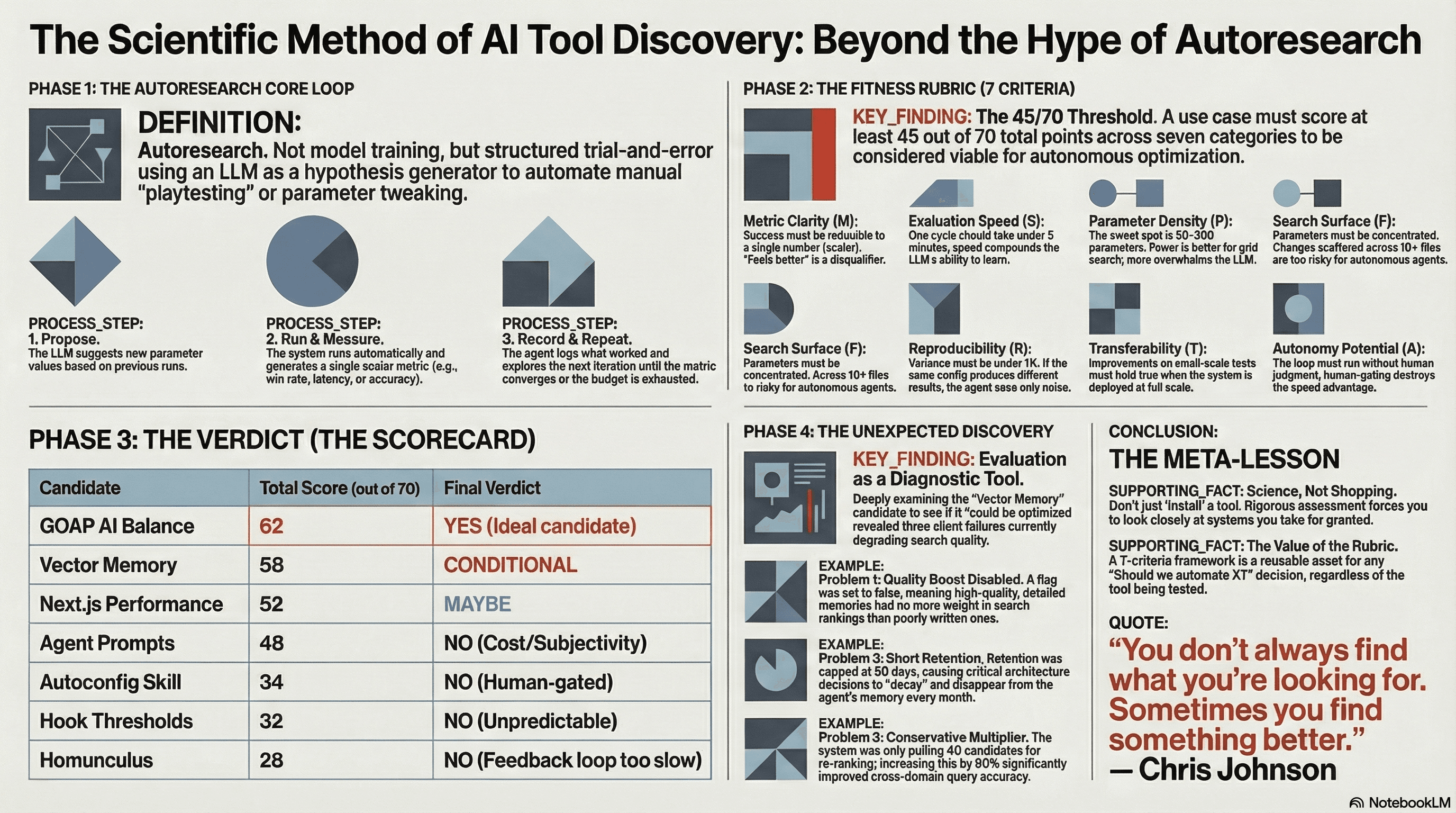
247 game AI parameters, 7 candidate use cases, 5 agents, 1 honest verdict: no. But the research process itself uncovered three real configuration problems in my Vector Memory server that had been silently degrading search quality for weeks.
35 MCP tools, 7 implementation tasks, 2 platforms, 1 session. How I used the superpowers brainstorming, writing-plans, and subagent-driven-development pipeline to integrate NotebookLM into Claude Code as a first-class MCP server.
50 instincts, 13 semantic clusters, 7 accepted candidates, 5 promoted skills. I built the third tier of a continuous learning pipeline that synthesizes behavioral patterns into reusable agents, skills, and commands.
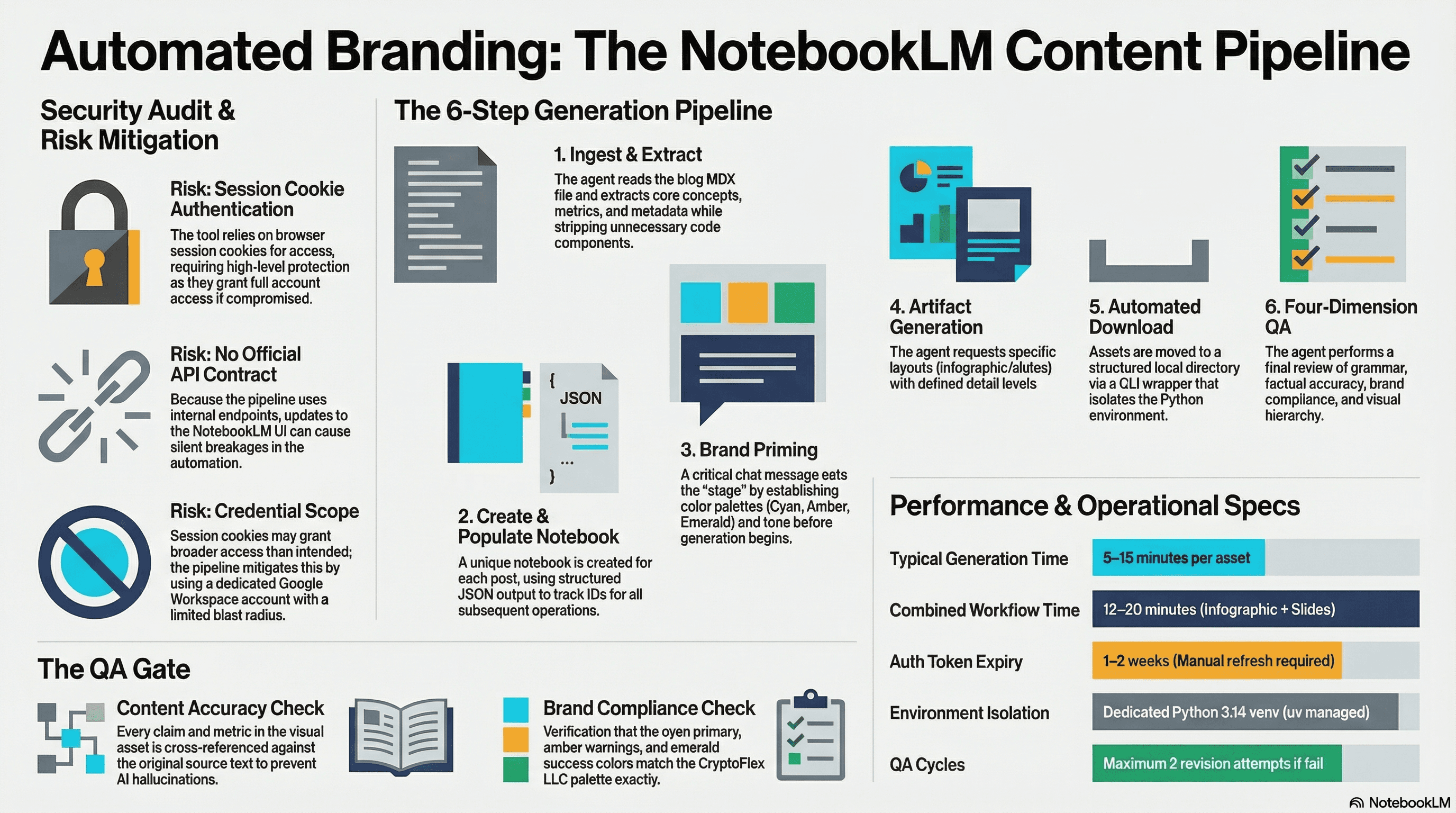
I set up notebooklm-py as a programmatic content creation pipeline for CryptoFlex LLC, building a custom agent and skill that turns blog posts into branded infographics and slide decks with automated QA. Here is how the security review went, what the pipeline looks like, and what I learned about trusting reverse-engineered APIs.
Building a Gmail cleanup agent in Claude Code, evolving it from a manual 5-step script to a fully autonomous v3 with VIP detection, delta sync, auto-labeling, and follow-up tracking. Then making it run unattended every 5 hours via scheduled triggers and a remote-control daemon on a Mac Mini.
I reviewed an AI-generated recommendation to convert my custom agents into 'captains' that spawn parallel sub-agents. Here's what I learned about factual assessment, corrected parallel structures, sandbox constraints, and when to use this pattern (or keep it simple).
How I cataloged 13 custom agents, 23 learned skills, 10 rules, 8 bash scripts, and 2 MCP servers into a searchable, filterable showcase page for my blog. One session. One new route. One background research agent doing the heavy lifting.
A comprehensive configuration overhaul that transformed my Claude Code workflow from serial execution to parallel agent orchestration. 7 custom agents, 9 rules reorganized, file protection hooks, and the philosophy of why every AI-assisted developer should go agentic-first.